

In-Person & Online Service every Sunday at 10:30 AM
Our Purpose
Oneida United Methodist Church is dedicated to serving the community through faith, fellowship, and outreach programs that reflect Christ's love.
We welcome all to join us.

Our Mission
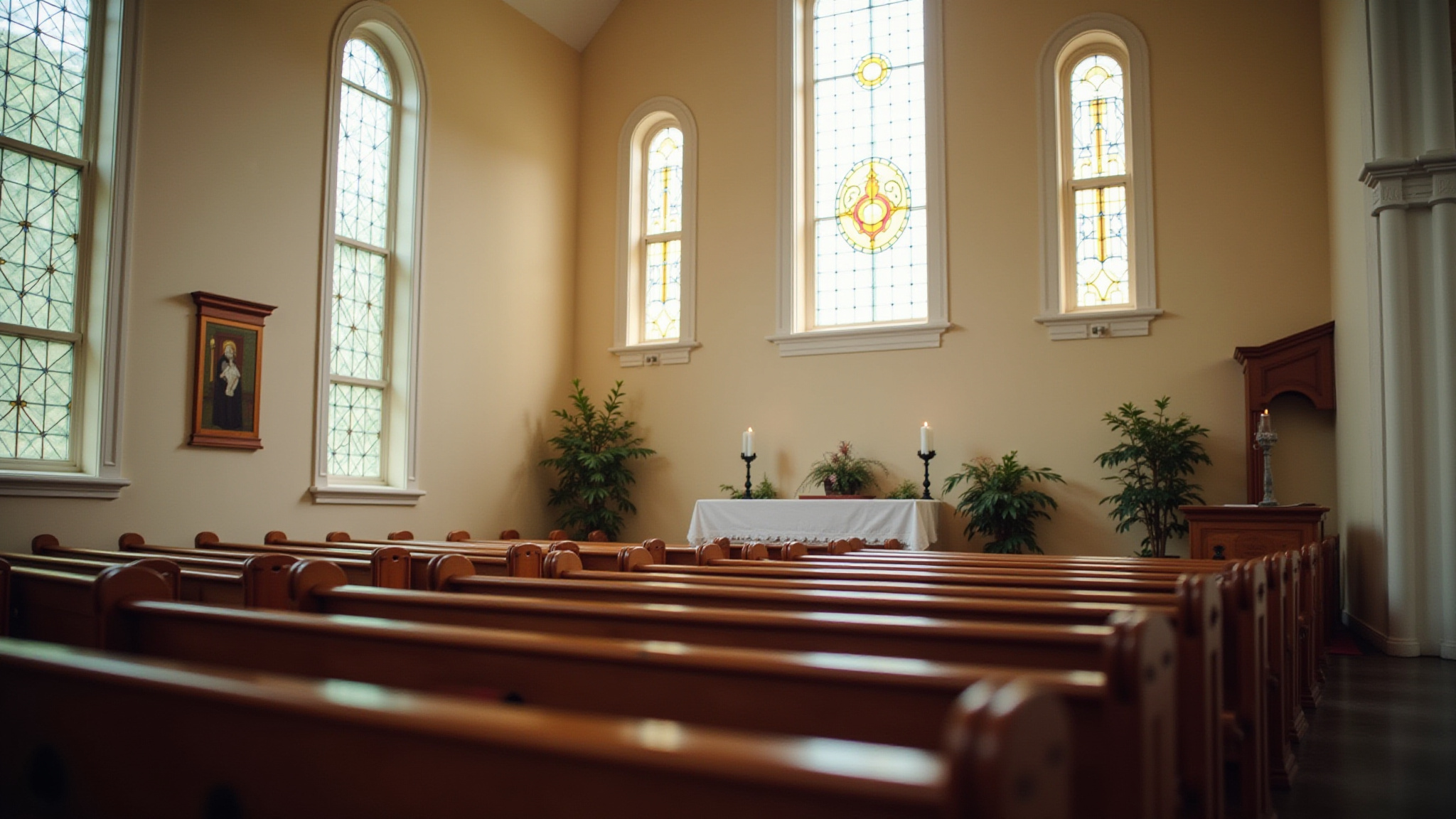
To make disciples of Jesus Christ for the transformation of the world.
We strive to spread God’s love throughout our community.
Location
N6037 County Road E
De Pere, WI, United States, 54115
Our History
The Oneida United Methodist Church celebrated 175 years of Methodist History on Sunday, August 21st 2005. A rousing service of worship and praise marked the celebration of the origins of the first Methodist Episcopal Congregation in Wisconsin. The service included exuberant Oneida drumming and singing of traditional songs as well as hymns in the traditional language.
An opening prayer of Thanksgiving was given in the Oneida language by Shahihokt, Leander Danforth. Jerry Danforth, the Oneida Tribal Chairperson, brought greetings. A detailed history of the Oneida people was given by Evelyn Elm. The Rev. Steve Poster preached the morning sermon. A final prayer and greeting was given by Harriet Alicea, a local pastor in the congregation.
The Oneida in New York State were part of the Five Nation Confederacy. This group had existed long before European contact. From its formation until the late eighteenth century the League was the most powerful political system in North America.
The Oneida were principal agriculturalists using "slash and burn" agricultural methods. The arrival of the Europeans not only brought military conflict but also devastating disease such as small pox and measles.
The Europeans also brought Christianity. The French introduced the Catholic Church as early as 1667. The Episcopalians and Presbyterians established congregations. The Methodist Episcopal Church established work in 1829. During the American Revolution, the Oneidas made valuable contributions to the American Army. At the end of the war, despite their loyalty, large tracts of land wee taken from the Oneida.
Eleazer Williams was born into a mixed-blood Mohawk family at Caughnawaga in about 1787. Baptized Catholic but educated by Congregationalists, Williams accepted a position offered by the Episcopal Church as missionary to the Haudenosaunee. In 1816. Williams arrived to begin his ministry and within a few years began laying plans for an ecclesiastical "Grand Iroquois Empire" somewhere west of Lake Michigan.... In 1821, Williams accompanied a delegation of Oneida and other New York Indians to Green Bay.... In 1624, about one hundred Oneidas and an equal number of Mohicans... arrived in Wisconsin and settled along the Fox River.
This was called the first Christian Party. Gradually other settlers came. In 1824, the Second Christian Party arrived. They were sometimes called the Orchard Party. These people were primarily Methodists.. Later arrivals were "pagans" or traditional people.
The Oneida settled in what was called Smithfield. This is on a bluff in the village of Kimberly...Only a part of the site has been built upon. The remainder is an open athletic field used by the employees of the Kimberly Clark Company, whose extensive paper mills lie to the left of the old Methodist settlement.
The Christians quickly gathered to worship. One early traveler reported that a Sunday School had been organized among the Oneida and regular services were held.
In 1824, about 200 people came from New York. The following year another 150 families arrived and they settled an crested a permanent settlement on Duck Creek' IN 1831, the Oneida on the east side (Methodist Episcopal) crossed over to the Duck Creek settlement. In 1833, the Oneida moved to New Smithfield of Oneida West, where the present church is located.
In June 1832, the New York Conference. Methodist Episcopal Church, appointed John Clark as missionary to Green Bay. Clark reached Green Bay on July 21, 1832. In September, while visiting the Oneida settlement, he organized a class, dedicated the log building, administered the Lord's Supper, and baptized a child. Subsequently, he visited and preached to this group every other weekend.
A school had already been established at Smithfield. Electa Quinney was the first teacher. She opened a school in 1828. The Brothertons had built a church and school. She was a Stockbridge-Munsee Indian herself. She was born and raised in New York. She attended a primary school in Clinton and then a female seminary in Connecticut.
Before coming to Wisconsin, she taught native American children in New York for six years. In 1832, she took charge of thirty students in the Oneida School. In 1833, she married Daniel Adams, a native preacher in the Mohawk language.
The Oneida congregation continued to prosper. John Clark made occasional visits until his death in 1854.
Oneida (West) ...really starts off the procession of churches erected distinctly for Methodist congregation in the forties. On Saturday, January 4, 1840, the chiefs of the Big Orchard party signed two instruments consecrating land and building to the worship of God and on the next day they stood before the altar, assenting as the documents were read to the congregation as part of the dedication service conducted by Julius Field.
Through the years twenty-nine missionaries have served the Oneida congregation. John Wenbergh served for twenty-two years. Harriet Alicea, an Oneida and a local pastor, has also served as pastor of the congregation.
In 1943, during a heavy thunderstorm, lightning hit the bell tower. The ensuing fire consumed the building but the sanctuary furniture was saved. The rebuilt sanctuary was dedicated in 1953, A new parsonage was purchased in 1962.
We all rejoice that over 175 years, this early congregation is alive, prospering and a strong witness in the community.
Flashbacks - United Methodist Historical Society of Wisconsin. Vol 31, No. 3. September, 2005
Meet Our Leadership Team

Pastor Laura Reimer
Lead Pastor